
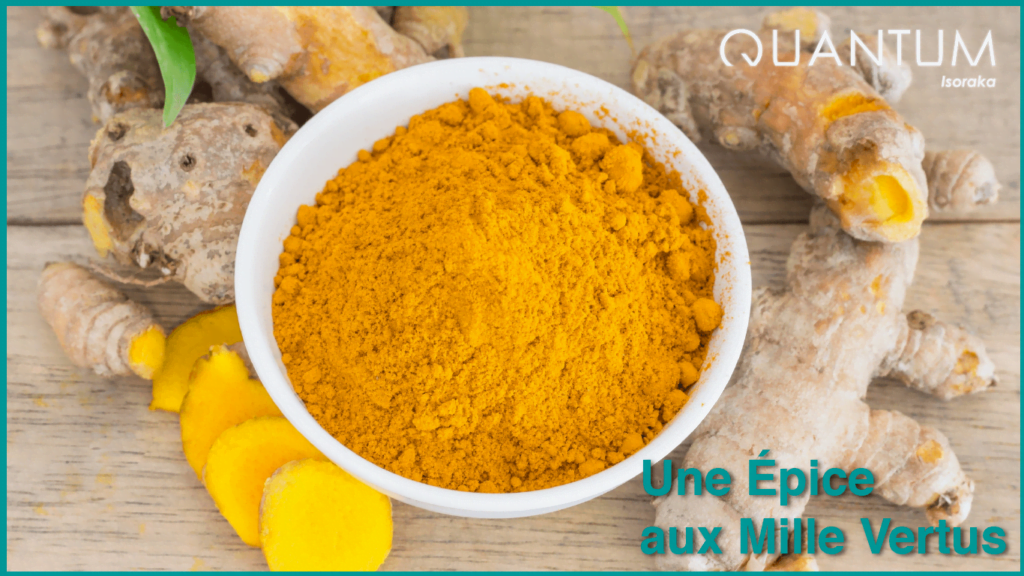
Turmeric gives many Indian dishes their golden colour. This spice, with its earthy, slightly bitter taste, finds its way into curries, rice dishes, marinades and spice blends. It is available both as a powder and as a fresh root.
In this article, discover its origins, its different forms, its uses in cooking and a few simple tips for using it well. A spice found from one cuisine to another, from India to Madagascar, just as we like them in Isoraka, Antananarivo.
On this page: Origins · Forms and taste · In cooking · Tips · 3-question quiz
Where turmeric comes from
Turmeric is the rhizome, or underground stem, of Curcuma longa, a plant from the same family as ginger. Native to South and Southeast Asia, it has been grown and used in India for centuries, in cooking as well as in traditions and ceremonies.
Its colour has earned it the nickname « Indian saffron », even though the two spices have neither the same taste nor the same origin. In Madagascar, turmeric is called tamotamo.
Forms and taste
Once boiled, dried and ground, the rhizome gives the familiar orange-yellow powder. Fresh, it looks like a small ginger root with bright orange flesh.
| Form | Taste | Common uses |
|---|---|---|
| Powder | Earthy, slightly bitter | Curries, dals, rice, marinades, spice blends |
| Fresh root | Brighter, peppery notes | Grated into marinades, sauces and hot drinks |
| Colouring (E100) | Used for its colour | Colouring food products |
Turmeric in cooking
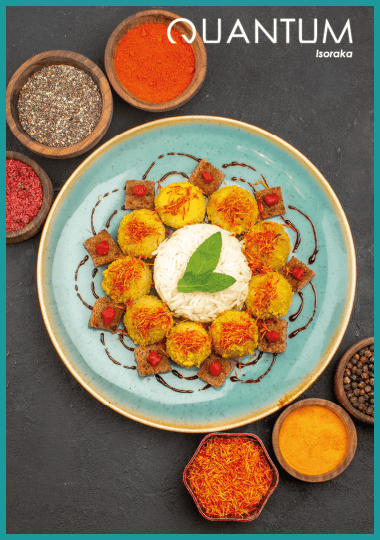
Turmeric is most often used in small amounts, alongside other spices:
- Curries and dals: it gives sauces and slow-cooked lentils their golden hue.
- Rice: a pinch is enough to colour a pilaf or fragrant rice.
- Marinades: it goes into yoghurt marinades, such as the one for paneer tikka.
- Spice blends: it pairs well with cumin, coriander, ginger and black pepper.
Turmeric is one of the spices that run through Indian cooking; read our overview of Indian cuisine.
Tips for using it well
- Fry it briefly: a few seconds in oil or ghee at the start of cooking softens its raw powdery taste and spreads its colour.
- Use it sparingly: too much, and its bitterness overpowers the other flavours.
- Protect your hands and worktop: its colour easily stains wood, plastic and fabric.
- Store it well: in an airtight jar, away from light and moisture, to keep its colour and aroma.
Test your knowledge
Three questions to recap the essentials. Your answers are not saved.
Indian flavours in Isoraka
Quantum Isoraka welcomes you in Isoraka, Antananarivo, to share the flavours of Indian and Mediterranean cuisine with family, friends or colleagues.
Book a table at Quantum Isoraka.
