
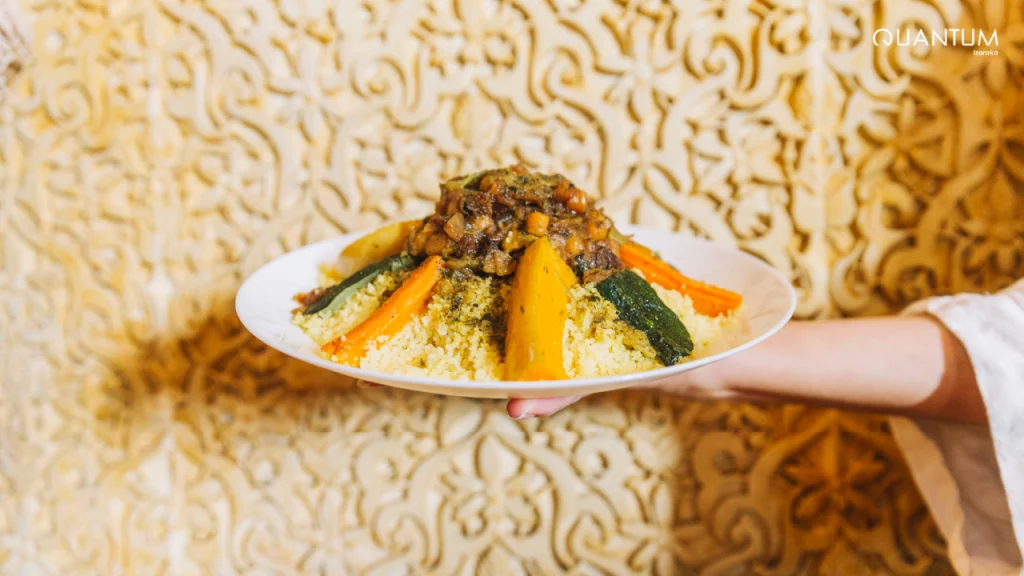
Fine semolina, rolled and steamed until light, seasonal vegetables and a drizzle of olive oil: Kabyle couscous owes much to the simplicity of its ingredients and the care that goes into preparing it. It comes from Kabylia, in northern Algeria, and every family has its own version, served with a sauce or simply steamed.
In this article, discover what Kabyle couscous is, what UNESCO recognised in 2020, the techniques behind good semolina, the main variations and a few tips for enjoying it.
On this page: What is Kabyle couscous? · A recognised heritage · Semolina techniques · Variations · Tasting tips · At Quantum Isoraka · 3-question quiz
What is Kabyle couscous?
Kabylia is a mountainous region of northern Algeria, home to the Djurdjura range. As everywhere in the Maghreb, couscous is central to the table there: in Tamazight (Berber), it is often called seksu.
There is no single Kabyle couscous recipe, but rather a family of dishes. They share steamed semolina, usually durum wheat and sometimes barley; vegetables that change with the seasons; olive oil, a staple of this olive-growing region; and, depending on the family and the occasion, a white or red sauce, with or without meat.
A heritage recognised by UNESCO
In December 2020, UNESCO inscribed the “knowledge, know-how and practices pertaining to the production and consumption of couscous” on the Representative List of the Intangible Cultural Heritage of Humanity, following a joint nomination by Algeria, Mauritania, Morocco and Tunisia.
The inscription recognises a shared culture: preparing the semolina, the tools, the skills handed down within families and the meals that bring people together. It is neither an official recipe nor a label awarded to a dish or a restaurant.
The techniques behind good semolina
Whether the semolina is rolled at home or bought ready-made, the result depends on a few simple steps, repeated patiently:
| Step | Why it matters |
|---|---|
| Moisten and roll the semolina | Rolling it with the flat of the hand forms even grains that do not stick together. |
| Sift to size | Grains that are too large or too fine are separated out so that everything cooks evenly. |
| Steam | The semolina cooks in the top part of the couscoussier, above the simmering sauce or water. |
| Fluff between rounds | The semolina is aerated by hand with a little water and fat, then returned to the steamer. |
| Moisten just before serving | Sauce or olive oil is added at the end, so the semolina is tender but not soggy. |
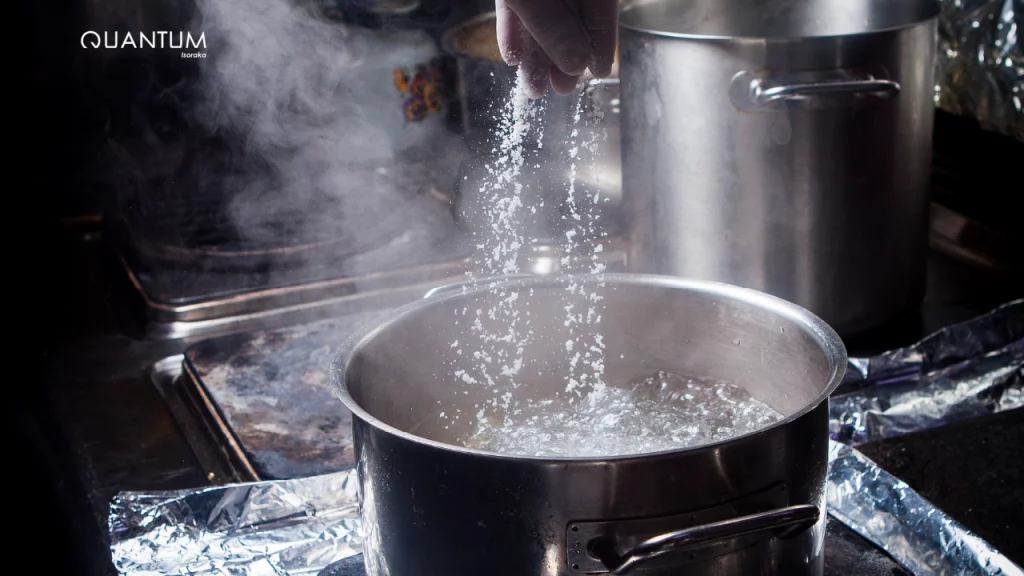
These steps take time rather than technical skill. That is one reason couscous remains linked to family meals and special occasions, when large quantities are made to share.
The main variations
- Semolina: usually durum wheat, sometimes barley for more rustic versions.
- Sauce: white, made with broth and mild spices, or red, with tomato.
- Vegetables: carrots, turnips, courgettes, pumpkin, broad beans or peas, depending on the season.
- Topping: with meat, often lamb or chicken, or entirely vegetarian.
- Steamed only: some versions serve the semolina and vegetables steamed, simply drizzled with olive oil.
Royal couscous, which brings several meats together on one plate, is another way of serving couscous.
Tasting tips
- Taste the semolina on its own first: light, separate grains say a lot about how it was prepared.
- Add the sauce or broth a little at a time, to taste.
- If harissa is offered, mix it into a little sauce before stirring it in.
- Place the dish in the middle of the table: couscous is meant to be shared.
Couscous at Quantum Isoraka
At Quantum Isoraka, the menu features several couscous dishes: vegetarian, chicken, merguez, lamb and royal. The Kabyle couscous described here is a family tradition with many variations; to find out which version will be served, ask when you book.
Test your knowledge
Three questions to recap the essentials. Your answers are not saved.
Share a couscous in Isoraka
Quantum Isoraka welcomes you in Isoraka, Antananarivo, to share a couscous with family, friends or colleagues.
Book a table at Quantum Isoraka.
