
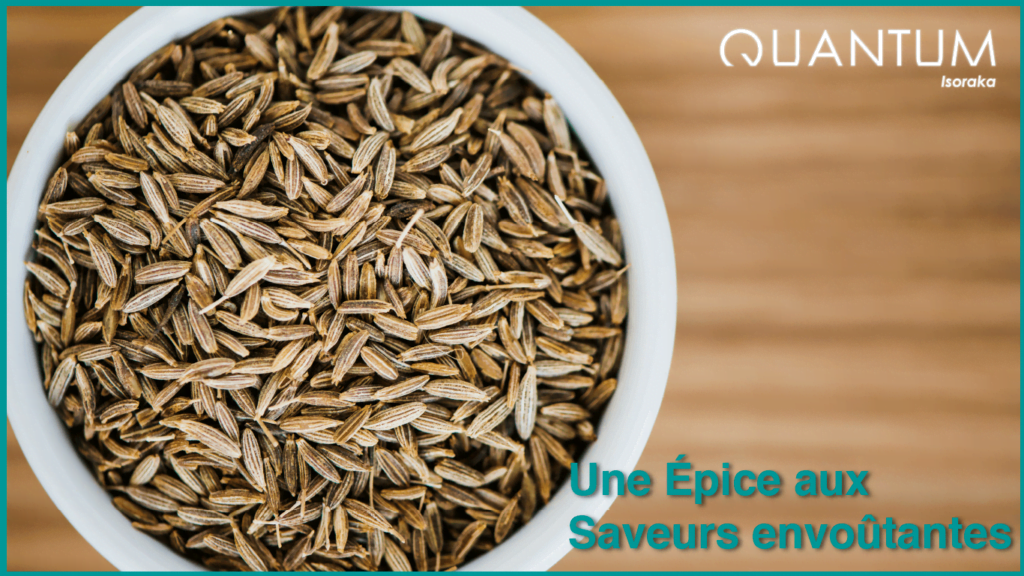
A small elongated seed with a warm, slightly earthy aroma: cumin is one of the most widely used spices in the world. You find it in Indian curries as well as in North African dishes, as whole seeds or ground.
In this article, discover where cumin comes from, its different forms, how it is used in cooking, the spices it is sometimes confused with, and a few simple tips for using it well.
On this page: Origins · Seeds or ground · Uses in cooking · Not to be confused with · Tips · 3-question quiz
Where does cumin come from?
Cumin (Cuminum cyminum) is a plant of the Apiaceae family, like coriander, fennel and carrot. What is used in cooking are its dried fruits, commonly called seeds.
Known since Antiquity around the Mediterranean and in the Middle East, it travelled along trade routes to India, North Africa and, later, Latin America. Today India is both its largest producer and its largest consumer; there it is called jeera.
Whole seeds or ground?
| Form | Characteristics | Typical uses |
|---|---|---|
| Whole seeds | Aroma released during cooking; they keep longer | Fried in oil or ghee, rice, stir-fried vegetables |
| Toasted seeds | Rounder, deeper taste | Freshly ground for raitas, salads, marinades |
| Ground | Convenient, but loses its fragrance faster | Spice blends, sauces, meatballs, soups |
Cumin in the cuisines of the world
- In India: the seeds are often fried in hot oil or ghee at the start of cooking (the tadka); cumin also goes into many blends, including most garam masalas.
- In North Africa: it flavours carrot salads, meatballs, soups and grilled meat, and appears in many ras el hanout blends.
- In the Middle East: it goes with chickpeas, broad beans and roasted vegetables.
- In Latin America: it is widely used in slow-cooked bean and chilli dishes.
Cumin pairs well with turmeric and coriander, two other staples of Indian spice blends.
Not to be confused with…
- Caraway: another member of the Apiaceae family with similar-looking seeds, but with a more aniseed taste.
- Nigella: small, angular black seeds sometimes called « black cumin », from a different plant.
Tips for using cumin
- Toast the seeds briefly in a dry pan over medium heat until fragrant; take them off before they darken too much, or they turn bitter.
- Grind them just before use, in a grinder or mortar, for a more intense aroma.
- Use it with a light hand: cumin has a strong taste that can dominate other spices.
- Store it in an airtight jar away from light and heat; whole seeds keep their aroma longer than ground cumin.
Test your knowledge
Three questions to recap the essentials. Your answers are not saved.
Spices in the spotlight in Isoraka
Quantum Isoraka welcomes you in Isoraka, Antananarivo, to discover cuisines where spices take centre stage. Read also our article on tahini.
Book a table at Quantum Isoraka.
